Donna
The Rise of the Voice Operating Model and Why Field Sales is the Beachhead

In Silicon Valley, “war on screens” has become shorthand for a bigger shift: computing is moving from “click and type” to “speak and do.” OpenAI itself is reportedly reorganizing teams around audio and working towards an audio‑first personal device, which is a strong signal that voice is no longer a feature; it’s becoming an interface layer.
But here’s the part I don’t think we’re discussing enough: the most obvious “screenless” winners won’t be consumer gadgets. They’ll be the enterprise workflows where screens were always a compromise. And field sales teams are one of the clearest examples.
Field sales refers to revenue teams that spend most of their time in the field rather than behind a screen: visiting customers, walking sites, moving between meetings, and managing relationships in the real world.
I’m Jonas Deprez, the co- founder and CEO of Donna. We built Donna, a voice‑first AI assistant for enterprise field sales teams, helping reps prepare for meetings and handling the admin afterwards (CRM updates, follow‑ups, next steps) with a mainly screenless experience.
Audio isn’t replacing screens, it’s taking over the first moment
One of the sharpest ways I’ve seen the “war on screens” described is this: audio is becoming the “front door” to interaction. You don’t reach for a screen when you have a fleeting thought (“What do I need for this meeting?”), when your hands are busy, or when your attention is split. In those moments, speaking is simply lower friction than unlocking, opening, navigating, and typing.
That matters because the system that captures intent first increasingly decides what happens next: which tools are invoked, which information is summarised, which actions get executed.
In practical terms, intent is the first expression of what a user wants to do: preparing for a meeting, updating a deal, scheduling a follow-up, or asking for context on an account.
In other words, the interface layer becomes a routing layer.
The headline isn’t “screens are dead.” The headline is: screens are being demoted from “starting point” to “confirmation layer.” And once you look at enterprise work through that lens, a set of jobs stands out immediately.
Field sales is structurally screen-hostile, and the economics are too big to ignore
Field sales is one of the last major enterprise functions still living in the physical world: driving to customers, walking sites, working in warehouses, visiting clinics, being in factories, moving between meetings. Those are exactly the moments where screens are awkward and slow, and where teams get punished for not keeping systems of record clean.
Two data points make the opportunity concrete.
- First, the workforce scale. In the United States alone, there are over 13 million people working in sales and related occupations, making it one of the largest professional job categories in the economy. (Source: U.S. Bureau of Labor Statistics). That’s a massive installed base of professionals whose work happens largely away from a desk and can be optimized.
- Second, the time sink. [Salesforce’s research (State of Sales, sixth edition)] reports that sales reps spend 70% of their time on non‑selling tasks like administrative work and meeting preparation. The same write‑up notes a long‑standing data problem: only 35% of sales professionals completely trust their organization’s data.
Those two facts combine into a structural opportunity:
Field sellers are expensive.
Their time is heavily consumed by work that isn’t selling.
And maintaining accurate systems of record becomes difficult when you're moving from customer visit to customer visit.
This is exactly why field sales deserves far more attention as an innovation space.
But the market opportunity is often framed incorrectly.
The market isn’t “field sales software.”
The market is the re‑capture of wasted selling capacity plus the repair of revenue operations signals (forecasting, pipeline hygiene, next‑step discipline) in environments where screens are creating friction.
That is a behaviour change problem as much as a technology problem. Which is why voice-first isn’t a gimmick here, it’s an adoption strategy.
Voice technology crossed the threshold, but enterprise winners are built in deployment, not demos
If you last looked at voice AI two years ago and concluded “nice demo, too flaky,” you weren’t wrong. But something important changed recently: the underlying infrastructure reached a quality level that makes production deployments viable.
One industry report summarises the 2025 breakthrough as a dramatic step‑change: speech recognition accuracy up 54%, costs down 60–87%, and latency reduction around 85% across the stack. It even estimates the market reaching $10.3B with 51% year‑over‑year growth.
And yet, the same report highlights the trap: perfect demos don’t predict production. Week‑one success may look like 95% in controlled environments, but can fall to 62% in messy, real‑world conditions (noise, interruptions, accents, multitasking).
That gap is not incidental for field sales, it is literally the operating environment.
A rep dictating notes in a car park. A multilingual enterprise where accents vary widely.
This is why I believe the moat in enterprise voice isn’t “we have access to a model.”
Enterprise buyers, unlike consumers, have moved from “How human does it sound?” to “What operational metric improves?”. The enterprise voice is won in deployment discipline: evaluation, orchestration, reliability, service, and maintenance. This is a useful lens for field sales enablement too.
That’s why we’ve been building Donna as an output‑driven system, not a “pleasant voice layer.” Donna isn’t just a voice assistant. It’s a screenless operating layer for field revenue teams.
What a voice-first field sales assistant must look like to win in enterprise
If you believe the interface shift is real and you believe field sales is a prime wedge, then the next question is: what are the requirements for a durable winner?
Here’s how we think about it.
A voice-first system must be designed around intent capture. The advantage of audio is that it operates in “in‑between moments”: commuting, hands‑busy contexts, transitions between tasks, where screens underperform. In field sales, those moments are most of the day.
But enterprise buyers won’t accept a fuzzy “assistant.” They are converging on a set of non‑negotiables:
- It must impact top-line revenue. In field sales, that means CRM completeness, follow-up speed, next-step adherence, and meeting readiness.
- It must be built for chaos. Production systems must perform under noise, accents, multitasking, and unpredictability.
- It must be auditable, to create trust in the sales pipeline.
- It must embed deeply into core workflows, governance models and existing systems with their custom structures (eg. CRM, ERP, …).
Whoever owns the first moment of intent owns the downstream workflow. Capture it reliably, and you don’t just save time. You upgrade the revenue intelligence the entire organization runs on, and that’s what we envision with Donna.
Additionally: the field rep must stay at the center of the experience. Too much enterprise software is designed primarily for reporting and management visibility, leaving the field sales rep with too many challenges at hand. We believe adoption happens the other way around: when a system genuinely helps the rep move faster, prepare better, and remove friction from their day.
Why we built Donna for the field, and what I believe happens next
If you combine the trends above, you get a fairly crisp thesis for the next few years:
- The interface shift is real. Big tech is pushing towards audio-first surfaces and ambient assistants.
- The business need is obvious. Field sales reps spend the majority of their time on non‑selling tasks, and data trust remains weak.
- The technical stack is ready enough, but only disciplined teams will ship production-grade systems that are deeply integrated in enterprise tech stacks. Voice AI infrastructure improved sharply, yet real-world deployment still fails without evaluation, orchestration, and reliability engineering.
In that world, field sales is an unusually strong beachhead. It’s a large workforce with high value per hour, operating in contexts where screens are friction, and it sits at the intersection of revenue and operational discipline.
That is why we are building a true voice-first operating model for enterprise field sales. Not only to replace screens, but also to replace the fragmentation of tools sellers need to navigate: CRM, email, calendar, playbooks, dashboards, notes, and follow-ups as disconnected layers. The cognitive load is real and the friction is constant.
A voice-native proactive assistant changes that.
When the rep experience is right, adoption happens naturally. And when adoption happens, the entire revenue engine improves.
In early deployments, we are already seeing the impact:
- Up to 75% less time spent on administrative work
- Up to 10x higher CRM adoption
- Up to 20% higher sales conversion
- Up to 10 x more data in your CRM for forecasting accuracy

Which ultimately leads to a better revenue signal and more selling capacity.
The shift is not just from typing to speaking. It’s from manually managing tools to having an intelligent layer that manages workflows on your behalf within your context.
In field sales, that becomes transformative because the work happens in motion. Donna is not a note-taker. She truly becomes a hyper-personalized layer between the rep, the system of record, and the revenue engine.
And if we do this right, it doesn’t just make reps happier. It changes the quality of the revenue signal that enterprises run on.
That’s the bet we’ve been making at Donna for the last two years: voice-first and multi-modal field sales enablement, built to enterprise standards.
Co-Founder & CEO, Donna
Related articles

MIT research shows 95% of enterprise AI pilots fail, not because the technology isn't ready, but because of people, process, and mindset. AI doesn't behave like SaaS: there's no fixed interface and no one-off go-live, so the classic pilot playbook sets projects up to stall. The companies that do reach production with measurable value share six habits: a clear process with a clear expected output, stakeholder alignment before kickoff, real AI skills in-house or through a partner, incentives that reward the new way of working, resources for iteration rather than just the launch, and an action plan built around early wins. Do it right and the payoff is real, our customers see up to 75% less admin time, 10× more insights captured in the CRM, and up to 20% higher sales conversion.
Donna
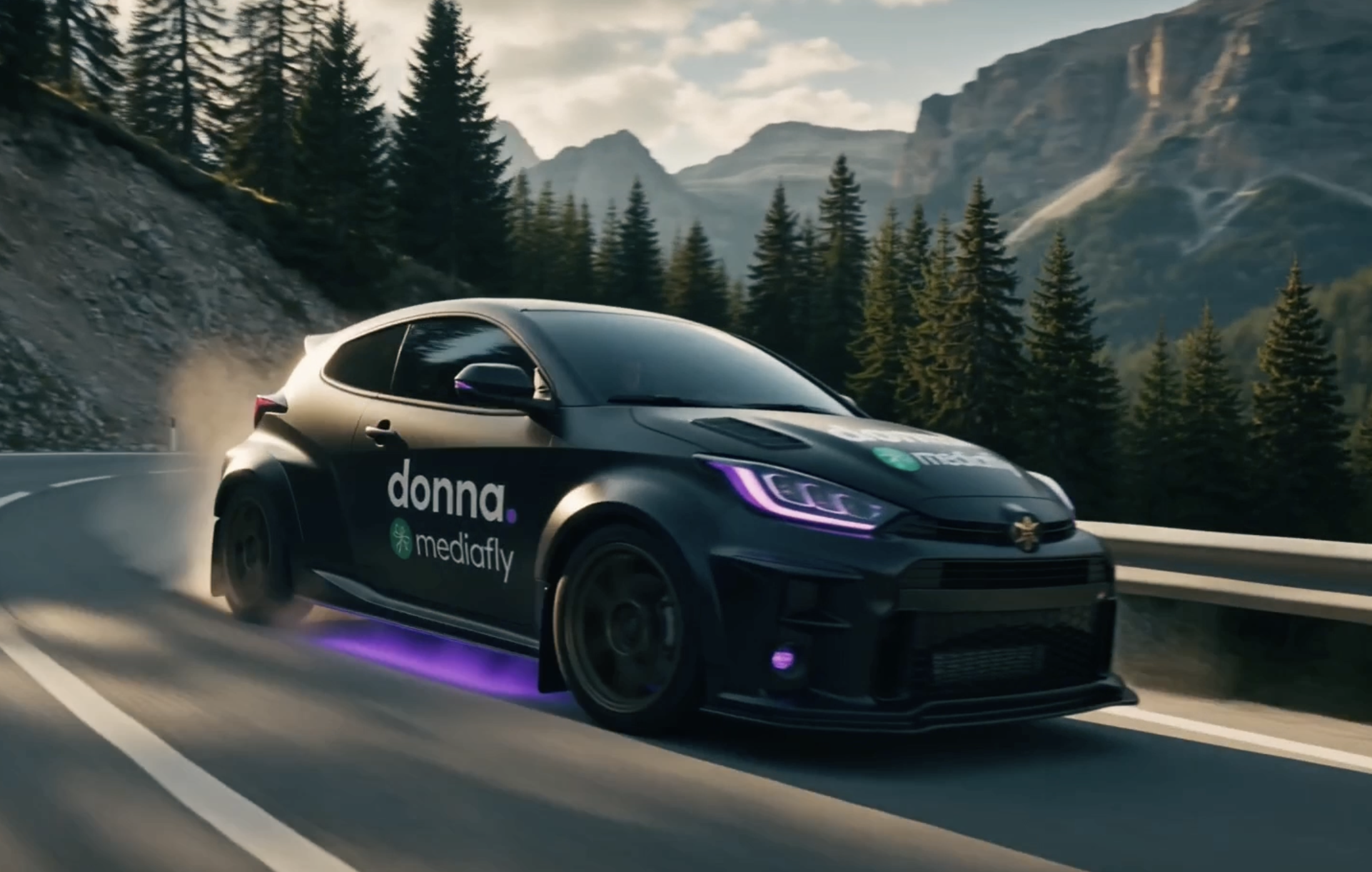
Today, Mediafly and Donna are joining forces as partners to introduce a new, voice-first era of revenue enablement—one where sales teams don’t adapt to systems, but systems adapt to them. **Built on deep CRM integration—especially for SAP Sales Cloud V1 and V2 environments—this collaboration ensures everything connects seamlessly from day one.** Together, we are making CRM screenless.
Donna

Donna launches a deep integration with SAP Sales & Service Cloud that lets field sales teams update CRM hands-free via voice and AI, eliminating admin work and improving performance. The result: up to 75% less admin, 10× higher CRM adoption, and +20% conversion rates, all while sales reps stay focused on customers instead of screens.
Donna
Talk to Donna today
Discover how Donna can simplify life for field sales teams


FAQs
Got questions? Donna got answers. Here’s what field sales teams ask most.
Is it legal to record online and offline customer conversations with Donna?
Yes, in most cases, as long as the applicable notice and consent requirements are followed. Recording laws vary by jurisdiction, so the key principle is to be transparent with participants and obtain consent where required. Donna includes controls to support this.
How does Donna use AI?
Donna combines different AI models to deliver a seamless experience, allowing users to text Donna, call Donna, or send voice notes. Donna uses AI to transcribe meeting recordings, help prepare meetings, generate summaries, capture and surface insights and propose or automatically perform actions such as updating the CRM, scheduling a follow-up meeting, or preparing a follow-up email.
Is customer data used for AI model training?
No. Customer data is never used to train or improve our or third-party AI models.
What is Donna and how does she help field sales teams?
Donna is a proactive AI assistant for field teams delivering hyper-personalized briefings, capturing every detail, and killing the admin time. She helps sales reps save time by preparing meetings, taking notes, updating the CRM, and drafting follow-ups automatically. With Donna, sales teams spend less time on admin and more time selling. Faster execution, stronger CRM adoption, and more wins, without longer hours. Happier, sharper teams start today with Donna.
Does Donna take notes during meetings automatically?
Yes. Donna listens, online and in person, to your meetings or calls, captures key points, and structures them into clean notes. Everything is stored and ready for review, so you can stay focused on the customer instead of typing. If you are not comfortable having a notetaker in your meeting, you can always update Donna afterwards.
Can Donna really update my CRM for me?
Absolutely. Donna automatically updates or creates contacts, opportunities, prepares quotes in your CRM and drafts follow-up mails. All data stays accurate and up to date without manual entry.
What tools and CRMs does Donna integrate with?
Donna integrates with Salesforce, SAP, Microsoft Dynamics 365, Outlook, Google Calendar, and more. Even if your CRM includes custom objects and fields, Donna connects seamlessly to keep everything in sync. Find all integrations here.
How much time can sales reps save by using Donna?
Sales teams typically spend less time on admin by 75%. By automating meeting prep, note-taking, and CRM updates, Donna helps reps reclaim time to focus on customers and close more deals.
Is Donna secure and GDPR-compliant?
Yes. Donna is ISO 27001 certified and fully compliant with GDPR, CCPA, and SOC 2. All data is encrypted in transit and never used to train AI models.
Our CRM is customized. Can Donna handle this?
Yes. Donna works with both standard and custom CRM objects and fields. Whether your setup is simple or highly customized, Donna connects seamlessly and keeps all your data accurate and up to date.
How is Donna different from other AI sales tools?
Donna’s purpose is built for field sales. Unlike generic AI assistants, Donna connects with your CRM, captures meeting notes, and updates contacts and opportunities automatically, even on the go. As Donna is deeply integrated into the day-to-day of field sales teams, she delivers a proactive, voice to voice and hyper-personalized experience.
How long does it take to set up Donna?
Donna connects to your CRM and calendar quickly, with most teams fully onboarded in less than two weeks. Setup requires less than a month, and our team supports every step of the process.